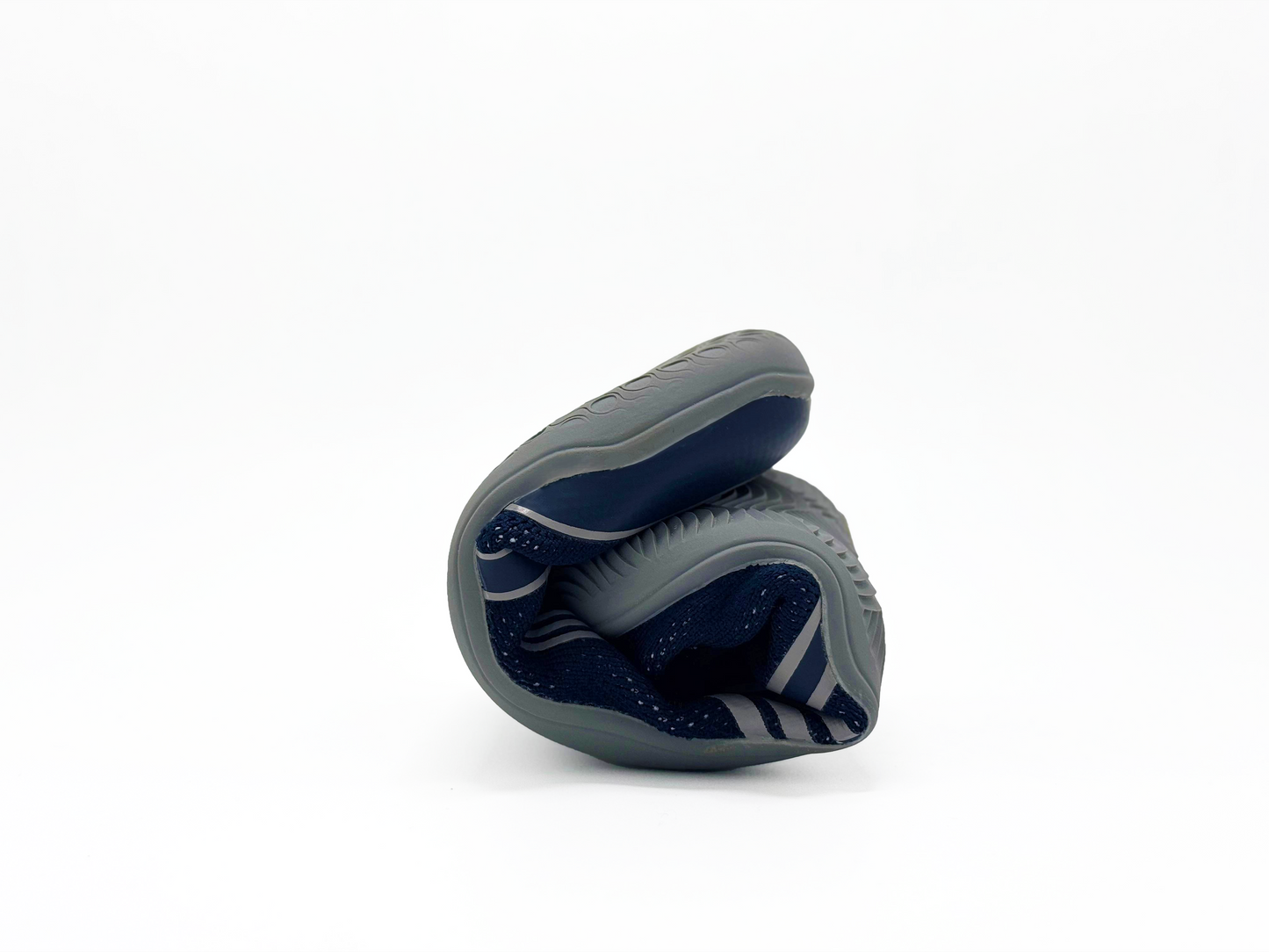
Flat Feet in India: Why the Usual Advice Gets It Backwards
If you have flat feet, you've probably heard the same advice your whole life: get arch support insoles, buy structured shoes, don't walk barefoot. It sounds logical. The arch isn't there, so you prop it up.
But what if that advice, while well-meaning, is actually keeping your feet weak, and making the problem worse over time?
That's not a fringe opinion. It's what a growing body of research is pointing to, and it's something worth understanding, especially in India, where flat feet are genuinely very common and yet most of the solutions on offer are borrowed from the west without questioning whether they fit our feet, our lifestyle, or our long-term health.
First : what actually is a flat foot?
A flat foot, medically called pes planus, simply means the arch of your foot is lower than average when you're standing. Your foot makes more contact with the ground than a foot with a higher arch.
Some people are born with it. Others develop it over time- from years of sitting, from weak foot muscles, from shoes that do all the work so the foot never has to. In most cases, it's painless. In some, it causes discomfort in the heel, arch, or even the knees and lower back because of how it affects your overall posture and gait.
Here's the thing: flat feet are not inherently a defect. They're often a symptom, of feet that haven't been allowed to move freely and strengthen naturally.
Why are flat feet so common in India?
India has an interesting relationship with footwear. For most of our history, people either went barefoot or wore minimal chappals, flat, simple, leaving the foot largely free to function naturally. Flat feet were far less common.
A study of people in India and China who had never worn shoes found something striking: they acquired very few foot defects, most of which were painless. Their range of foot motion was remarkably broad, allowing for full, natural foot activity. You can read that research on our Barefoot Research page.
But in the last few decades, as structured Western footwear became the norm in schools, offices, gyms, our feet started changing. Rigid soles, elevated heels, and narrow toe boxes meant our foot muscles had less and less to do. And like any muscle that isn't used, they gradually weakened.
The arch of the foot is not a bone structure. It's held up by muscles and tendons, primarily the tibialis posterior and the intrinsic foot muscles. When those muscles get weak, the arch drops. That's flat feet, in most cases.
So what does the usual advice actually do?
When you go to a doctor or a shoe shop and mention flat feet, the standard recommendation is arch support, either built into a shoe or as a separate insole that props the arch up from below.
In the short term, this can relieve pain. That's real, and it matters. We're not dismissing that.
But here's the problem with relying on arch support as a long-term solution: when you support the arch artificially, the muscles that are supposed to hold it up get even less work to do. Over time, they weaken further. The arch becomes more dependent on the support, not less. You end up needing more and more support, not less.
It's a bit like putting your arm in a cast when it isn't broken. Immobilise a muscle long enough, and it forgets how to work.
What the research actually says
Barefoot people have stronger, healthier feet
Harvard evolutionary biologist Daniel Lieberman has spent years studying feet across different cultures and found that barefoot runners and walkers consistently show healthier foot mechanics- they don't heel-strike, they distribute load more naturally, and they suffer fewer chronic injuries. His landmark research, published in Nature, changed how sports scientists think about footwear.
Minimalist shoes strengthen foot muscles
A 2019 study published on PubMed tracked runners who switched to minimalist (barefoot-style) shoes over an extended period. The runners who put in more distance in these shoes significantly strengthened their plantar flexors, the very muscles responsible for supporting the arch. More movement, less restriction, stronger feet. You can read the full study here.
The arch works best when it's free to move
A 2022 study examining the medial longitudinal arch, the main arch of the foot, found that barefoot running allowed the arch muscles to function more naturally and reduced abnormal stress on the foot's joints and soft tissue, compared to wearing cushioned, structured footwear. The arch is designed to flex, absorb shock, and spring back. When you lock it in place with a rigid insole, you take away exactly the mechanism that makes it strong. Read that research here.
What should you actually do if you have flat feet?
A few important caveats first: if you have significant pain, a structural deformity, or have been diagnosed with a specific condition affecting your feet, please consult a physiotherapist or podiatrist. This post is not medical advice, and for some people, some level of support during a recovery period is genuinely necessary.
That said, for the large majority of people with flat feet, especially those whose condition developed gradually over years of wearing restrictive shoes — the path forward is likely the opposite of what they've been told. Here's where to start:
• Transition slowly to more minimal footwear. You don't go from structured shoes to zero-drop overnight. Your feet need time to adapt and gradually rebuild strength. Start by wearing more minimal shoes for an hour or two a day and increasing over weeks and months. We have a whole guide on transitioning to barefoot shoes if you want a step-by-step.
• Give your toes room. One of the biggest underrated causes of foot weakness is a narrow toe box that squeezes the toes together. Your toes are supposed to splay out for balance and load distribution. Shoes with a wide, foot-shaped toe box- like both our Origin trainer and Kairos sneaker let this happen naturally.
• Walk and stand more on natural surfaces. Grass, sand, uneven ground, these surfaces activate far more of your foot's sensory and muscular system than a flat floor. Even a short daily walk on grass, barefoot or in minimal shoes, makes a real difference.
• Strengthen your intrinsic foot muscles. Simple exercises: toe curls, single-leg stands, calf raises on an uneven surface specifically target the muscles that support the arch. A few minutes a day consistently is far more valuable than any insole.
• Be patient. Feet that have been in structured shoes for decades won't transform in two weeks. Progress is measured in months, and that's okay. Most people notice meaningful improvement in foot strength and comfort within three to six months of committed transition.
The Indian context matters here
One more thing worth saying: the standard "solutions" for flat feet- expensive orthotics, motion-control running shoes were largely designed and marketed in Western markets, for Western feet, that had been wearing shoes since childhood.
Indian feet are different. Studies suggest that people who grew up wearing minimal footwear or going barefoot have a broader, more mobile foot, a stronger arch, and a lower rate of structural deformity. The goal isn't to fix your feet to fit Western footwear norms. It's to let your feet return to how they were meant to function.
India is one of the few countries where we have a cultural memory of going barefoot in temples, at home, in many traditional contexts. That's not a lack of development. It's a head start.
A word of honesty
We make barefoot shoes. So you might reasonably wonder if we're biased here.
The honest answer is: we started Zen Barefoot because we genuinely believe this approach works, and the research backs it up. But barefoot shoes are not a magic cure for flat feet. They're a tool, one that removes the thing (restrictive footwear) that may be perpetuating the problem and allows your feet to do what they're built to do.
If you're dealing with flat feet, the most important thing is to move more, move freely, and give your feet room to work. A barefoot shoe can help with that. So can going barefoot on safe surfaces. So can targeted strengthening exercises.
What probably won't help in the long run despite what you've been told is a thick insole doing all the work for you.
Frequently asked questions
Are flat feet a permanent condition?
Not necessarily. In many cases, flat feet caused by muscle weakness and years of restrictive footwear can improve significantly with consistent strengthening, better footwear choices, and more movement. Structural flat feet present from birth may not change, but can still become pain-free with the right approach.
Can I wear barefoot shoes if I have flat feet?
Yes, but transition slowly. Start with short periods of wear an hour a day, and gradually increase over several weeks. Your feet need time to adapt. If you experience significant pain during the transition, consult a physiotherapist.
What's the difference between flat feet and fallen arches?
Fallen arches usually refer to a condition that develops in adulthood when an arch that was once normal begins to collapse, often due to tendon damage or excessive load. Flat feet often refer to a condition present from childhood. The approach to strengthening the foot is broadly similar for both.
Do children with flat feet need special shoes?
Most children have flat-looking feet until around age 6, when the arch develops naturally through movement and use. Putting children in heavily structured shoes early can actually interfere with this natural development. Research suggests letting children move freely on varied surfaces and in minimal footwear supports healthier arch development.
Which Zen Barefoot shoe is best for flat feet?
Both the Origin (our trainer) and the Kairos (our everyday sneaker) feature a wide toe box, zero heel-to-toe drop, and a flexible sole- the three features that allow your foot muscles to work naturally. If you're new to barefoot shoes, we'd recommend starting with whichever one fits your primary activity, and reading our transition guide before you begin.